Abstract
Topical Rifampin and Infection in Open Neural Tube Defects
Pages: 22-23
Category: Editorial
Published Date: 25-12-2025
Atef Hulliel
Author Affiliation:
1 Faculty of Medicine, Jordan University of Science & Technology. Irbid-Jordan
Keywords:
Rifampin, Neural Tube Defects
Abstract:
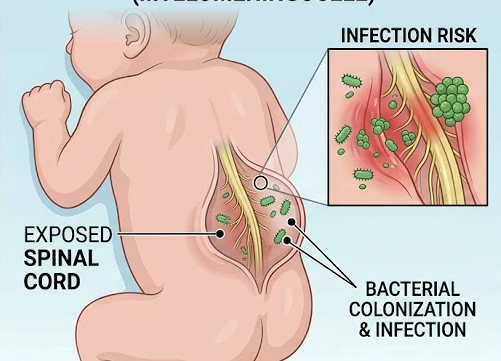
We commend the study, “Efficiency of Topical Rifampin on Infection in Open Neural Tube Defects: A Randomized Controlled Trial,” recently published in The International Journal of Neuroscience, for its valuable insights into infection prevention in open neural tube defects (NTDs). However, several aspects warrant further discussion to enhance the robustness and applicability of the findings. The study does not specify the follow-up duration, a critical omission as ventriculoperitoneal (VP) shunt-related infections may develop over time. Extending the follow-up could provide a more comprehensive evaluation of rifampin’s long-term efficacy and safety. Furthermore, although no adverse effects were reported, the study lacks details on monitoring procedures, limiting conclusions about rifampin’s safety profile. Another concern is the significantly higher rate of cerebrospinal fluid (CSF) sac ruptures in the rifampin group (p=0.006). The absence of discussion regarding potential causes and clinical relevance of this finding requires further investigation. Additionally, the study’s focus on paraplegic newborns with open NTDs raises questions about generalizability. A broader inclusion, as seen in another study addressing paraplegic and non-paraplegic cases, found meningitis or VP shunt infections in 6.7% and surgical site infections (SSI) in 3.3% of patients treated with topical rifampin. Clarifying these issues, particularly regarding long-term outcomes, adverse event monitoring, and generalizability, would strengthen the study’s conclusions. Addressing the implications of CSF sac rupture rates is also crucial. We hope these observations contribute to ongoing research in this important area.